

Over 200 students, educators, healthcare experts and volunteers participate in awareness-driven initiative promoting inclusivity and open dialogue
Ahmedabad: In a significant step towards promoting menstrual health awareness and inclusive conversations in academic spaces, Narayana Business School (NBS), Ahmedabad, organized “Period Power Up – The 100% Conversation” on the occasion of World Menstrual Hygiene Day 2026.
The initiative witnessed participation from more than 200 attendees, including students, faculty members, healthcare professionals, social advocates, volunteers, and alumni. The event focused on normalizing conversations around menstrual health, encouraging empathy-led leadership, and fostering a more inclusive ecosystem for young professionals and students.
Organized in collaboration with Menstrupedia, Stayfree India, CII Indian Women Network (IWN) Gujarat, Tresna Foundation, Sannidhya Maternity & Multispeciality Hospital, PhilComm, SomComm, and the Women Development Cell of NBS, the program brought together industry stakeholders and experts to discuss awareness, accessibility, workplace inclusivity, and the social stigma associated with menstrual health.
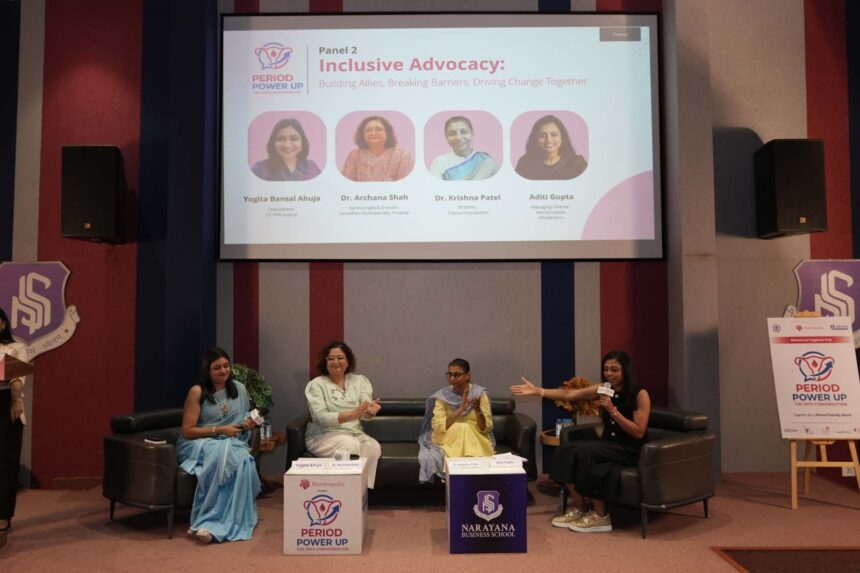
The event featured keynote addresses, expert panel discussions, student engagement sessions, and interactive conversations aimed at encouraging informed dialogue and behavioural change.
Key speakers at the event included Ms. Supriya Srinivasa from Stayfree India, Ms. Aditi Gupta, Founder of Menstrupedia, Ms. Yogita Bansal Ahuja, Chairperson of CII IWN Gujarat, Dr. Archana Shah, Director at Sannidhya Multispeciality Hospital, Dr. Krishna Patel, Founder of Tresna Foundation, and Mr. Vishal Tiwari, Vice President – Growth & Strategy, Narayana Business School.
Dr. Purvi Gupta, Dean, and Dr. Amit Gupta, Director, Narayana Business School, emphasized the institution’s commitment to creating socially aware and emotionally intelligent future leaders through meaningful industry-academia-community collaborations.
A key highlight of the campaign was a dedicated social media challenge encouraging male participation in menstrual health conversations. The initiative aimed to promote empathy, break stereotypes, and create a broader culture of understanding and inclusivity among youth.
The event concluded with a collective message advocating dignity, awareness, accessibility, and the normalization of menstrual health discussions across educational institutions, workplaces, and society at large.